
When most people think about metabolism, they think about one thing:
How fast their body burns calories.
And if they’re gaining weight, feeling sluggish, craving sugar, or having a hard time losing stubborn belly fat, they assume their metabolism must be “slow.”
But your metabolism is not just one little switch that gets flipped on or off.
It’s a whole network of systems working together every second of the day. Your blood sugar, appetite, digestion, mood, stress response, sleep, hormones, inflammation, and energy levels all play a role.
So if your metabolism feels off, it may not be “broken.”
It may be overwhelmed.
And the state your body is always trying to return to has a name:
Metabolic homeostasis.
That simply means your metabolism is calm, steady, balanced, and working the way it should.
When your body is in metabolic homeostasis, you may feel more energized, more in control of cravings, more satisfied after meals, and better able to maintain a healthy weight.
But when too many things start pulling your metabolism out of balance?
That’s when the cravings, energy crashes, stubborn weight, and “why am I hungry again?” moments can show up.
The good news is that you can support your body’s return to metabolic balance. And at the end of this blog, I’ll show you one very easy way to do that using SomaLeaf’s Metabolic Pearls, a hemp-based softgel designed to support the body systems connected to metabolism, satiety, digestion, cravings, and mood.
But first, let’s look at the sneaky things that may be throwing your metabolism out of balance.
1. Stress That Never Turns Off
A little stress here and there is normal.
But constant stress?
That can be a big problem for your metabolism.
When you’re under stress, your body shifts into survival mode. It releases stress hormones like cortisol, which can affect appetite, cravings, energy, sleep, and how your body handles food. Research has linked chronic stress and cortisol with appetite changes, food intake, energy expenditure, abdominal obesity, and metabolic risk.

And your body does not always know the difference between “real danger” and modern daily stress.
➡️ A work deadline.
➡️ Money worries.
➡️ Relationship stress.
➡️ Poor sleep.
➡️ Family drama.
➡️ Too much noise, too many responsibilities, too little rest.
Your body may respond to all of it like something is wrong.
That’s one reason stress can make cravings feel so powerful. Your body may start reaching for quick comfort: sugar, chips, bread, snacks, chocolate, or anything that gives a fast reward.
This is not because you have no willpower.
It’s because your body is trying to feel safe, soothed, and energized.
The fix: You do not need to eliminate all stress from your life. That’s impossible.
But your metabolism loves signals of safety.
Try adding small calming habits into your day:
- Take a 10-minute walk
- Breathe slowly before meals
- Get outside in the morning
- Stretch before bed
- Turn off screens earlier
- Eat without rushing
- Give yourself a quiet break before reaching for snacks
The more often your nervous system feels calm, the easier it may be for your metabolism to feel calm too.
2. Blood Sugar Roller Coasters
Have you ever felt fine one minute…
Then suddenly starving, shaky, cranky, tired, or desperate for something sweet?
That may be your blood sugar talking.
Your blood sugar naturally rises after you eat. Then insulin helps move that sugar out of your bloodstream and into your cells, where it can be used for energy. But if your meals are mostly refined carbs or sugar, or if you go too long without eating, your blood sugar may spike and crash.
That crash can trigger cravings, hunger, low energy, and the feeling that you need food right now.
Over time, unstable blood sugar can also make it harder for the body to respond properly to insulin. NIDDK explains that insulin resistance happens when cells in the muscles, fat, and liver do not respond well to insulin, which can cause blood glucose levels to rise.
This is one of the biggest reasons a metabolism can start to feel overwhelmed.
Because your body is constantly trying to regain balance.
➡️ Spike.
➡️ Crash.
➡️ Crave.
➡️ Snack.
➡️ Repeat.
The fix: You do not need a perfect diet. But you do want meals that give your body steadier energy.
Try building meals around:
- Protein
- Fiber
- Healthy fats
- Vegetables
- Whole-food carbs
For example, instead of toast by itself, try toast with nut butter. Instead of fruit alone, try fruit with a handful of nuts. Instead of pasta alone, add tofu, beans, or vegetables.
These small changes can help slow digestion and support steadier energy.
Because when blood sugar is calmer, cravings often feel calmer too.
3. Poor Sleep
Sleep is one of the most underrated metabolism tools.
Most people think sleep is just for rest.
But while you sleep, your body is busy repairing, resetting, and regulating important systems — including the systems that affect appetite, blood sugar, energy, and weight.
When you do not sleep well, your body may have a harder time handling glucose and insulin. NHLBI notes that sleep deficiency can affect how the body reacts to insulin and may result in higher-than-normal blood sugar levels.
One NIH-supported study also found that restricting sleep to 6.2 hours or less per night for six weeks increased insulin resistance among women, with stronger effects seen in postmenopausal women.
That means even if your diet is pretty good, poor sleep can still make your metabolism work harder.
And you’ve probably felt this before.

After a bad night of sleep, you may notice:
- More cravings
- More hunger
- Less motivation to move
- Lower energy
- A stronger desire for sugar or carbs
- More snacking at night
- Less patience with healthy habits
Again, this is not a character flaw.
It’s biology.
Your tired body wants fast energy.
The fix: Try to protect your sleep like it’s part of your nutrition plan.
A few simple habits can help:
- Go to bed at a similar time each night
- Keep your room cool and dark
- Avoid heavy late-night snacking
- Get morning sunlight
- Cut caffeine earlier in the day
- Put your phone away before bed
- Create a short wind-down routine
Better sleep does not just help you feel rested.
It helps your metabolism feel less overwhelmed.
4. Chronic Inflammation
Inflammation is not always bad.
In fact, short-term inflammation is part of how your body heals.
If you get a cut, twist an ankle, or fight off an infection, inflammation helps your body respond.
The problem is when inflammation never really shuts off.
Chronic, low-grade inflammation has been linked to obesity, insulin resistance, and metabolic syndrome. Researchers have described obesity and metabolic disease as closely connected with inflammatory activity in tissues like fat and the liver.
Think of inflammation like background noise in your body.
When it’s low, your metabolism can “hear” the right signals.
But when that noise gets louder, the body may have a harder time managing blood sugar, energy, appetite, and fat storage.
Some common inflammation triggers include:
- Poor sleep
- Chronic stress
- Too much processed food
- Low activity
- Excess alcohol
- Not enough fruits and vegetables
- Gut imbalance
- Carrying extra body fat
This does not mean you need to panic about every little choice.
It simply means your metabolism works best when your body feels supported instead of inflamed.
The fix: Focus on anti-inflammatory basics:
- Eat more colorful plants
- Walk daily
- Get enough sleep
- Reduce ultra-processed foods
- Drink enough water
- Manage stress
- Support gut health
- Add omega-3-rich foods like chia, flax, hemp seeds, or walnuts
You do not need perfection. You need consistency.
5. Constant Cravings
Cravings can make healthy eating feel impossible.
You may start the day with good intentions…
Then by 3 p.m., you’re hunting for something sweet.
Or you eat a good dinner…
Then find yourself back in the kitchen an hour later looking for “just a little something.”
This is one of the most frustrating signs that your metabolism may be out of balance.
Because cravings are rarely just about food.

They can be tied to:
- Stress
- Poor sleep
- Blood sugar crashes
- Low protein intake
- Low fiber intake
- Emotional eating
- Habit loops
- Hormonal changes
- Reward pathways in the brain
This is why “just use more willpower” is such bad advice.
Willpower may help for a little while. But if your cravings are being driven by stress, poor sleep, unstable blood sugar, or appetite signals that are out of rhythm, you’re fighting your own biology.
And that fight is exhausting.
The fix: Instead of only trying to resist cravings, ask what may be causing them.
➡️ Are you eating enough protein?
➡️ Are you sleeping enough?
➡️ Are you stressed?
➡️ Are your meals too low in fiber?
➡️ Are you skipping meals and then crashing later?
➡️ Are you using snacks to cope with emotions?
Once you find the pattern, cravings become less mysterious.
And once your body feels more balanced, cravings often become easier to manage.
6. Not Enough Muscle Or Movement
Your muscles are one of your best metabolic tools.
➡️ They help your body use glucose.
➡️ They support strength and mobility.
➡️ They burn energy.
➡️ They help with insulin sensitivity.
➡️ They make everyday life easier.
But many people move less than they realize.
They sit at work. Sit in the car. Sit on the couch. Then wonder why their energy feels low and their metabolism feels sluggish.
Physical activity helps the body manage blood sugar and become more sensitive to insulin. The CDC says regular physical activity is important for blood sugar management, and even a clear goal like a 10-minute walk after dinner can be a helpful starting point.
This does not mean you need to become a gym person overnight.
Your metabolism does not require extreme workouts.
It just loves movement.
The fix: Start simple:
- Walk after meals
- Take the stairs
- Stretch while watching TV
- Do bodyweight squats
- Lift light weights
- Try resistance bands
- Stand up more often
- Add short movement breaks during the day
Strength training is especially helpful because muscle supports metabolic health over time.
But even walking is powerful.
Especially after meals.
The goal is not to punish your body.
The goal is to remind your body that it is alive, active, and capable.
7. Ignoring Your Body’s Natural Balance System
This may be the sneakiest one of all.
Your body already has systems designed to help keep you balanced.
One of those systems is called the endocannabinoid system, or ECS.
The ECS is involved in many areas of the body, including appetite, food intake, energy balance, and metabolism. Research reviews have described the endocannabinoid system as an important regulator of appetite, energy balance, eating behavior, and macronutrient metabolism.
In simple terms?
Your body has a built-in balancing system.
And that system may play a role in how hungry you feel, how satisfied you feel, how your body handles energy, and how your metabolism stays steady.
This matters because many people try to support metabolism from only one angle.
They eat less. They exercise harder. They cut carbs. They count calories. They try to force the body into submission.
But your metabolism may not need more pressure.
It may need more balance.
That’s where metabolic homeostasis comes back in.
Metabolic homeostasis is your body’s ability to stay steady and regulated.
Not panicked. Not inflamed. Not constantly craving. Not spiking and crashing. Not stuck in stress mode.
Just calm, balanced, and supported.
And that brings us to one of the easiest ways to support it.
How To Calm And Balance An Overwhelmed Metabolism
If your metabolism feels off, the answer is not to blame yourself.
It’s not to starve yourself. It’s not to punish yourself with extreme workouts. It’s not to rely on willpower every hour of the day.
Instead, your body may need support from multiple angles.
➡️ Support for cravings.
➡️ Support for appetite.
➡️ Support for mood.
➡️ Support for digestion.
➡️ Support for the body systems that help keep metabolism in balance.
That’s exactly why SomaLeaf created Metabolic Pearls.
Metabolic Pearls are softgels made with four hemp-based cannabinoids: CBD, CBDV, THCV, and CBG. SomaLeaf says these hemp molecules help regulate key systems in the body connected to metabolism, satiety, and digestion, and that the endocannabinoid system plays a major role in metabolism and hormones that influence food cravings.
In other words, Metabolic Pearls are not about forcing your metabolism.
They are about helping calm and balance it.
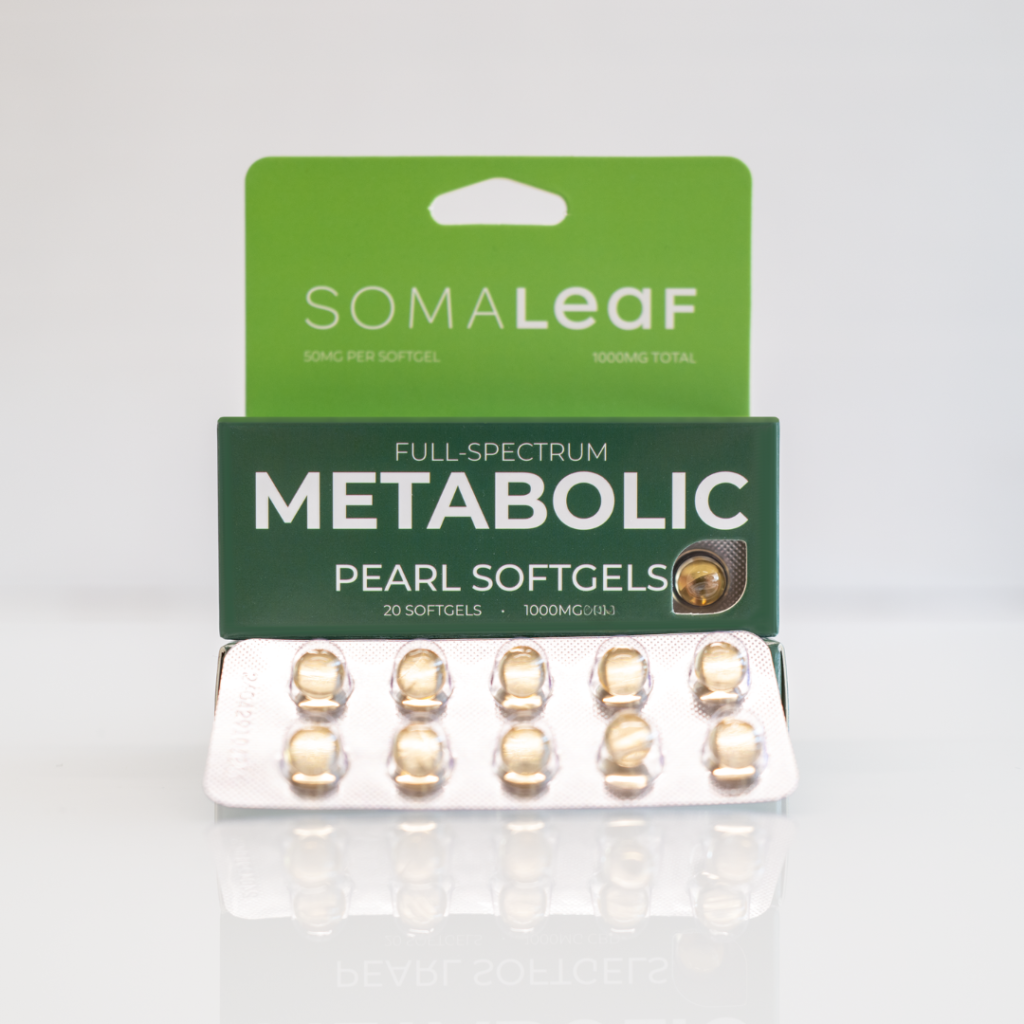
That makes them a great fit if you feel like your metabolism is overwhelmed by cravings, stress, low energy, sluggish digestion, or appetite signals that feel out of control.
SomaLeaf designed Metabolic Pearls to support:
- Metabolism
- Food cravings
- Satiety
- Digestion
- Mood balance
- Metabolic homeostasis
- The body’s natural endocannabinoid system
And because they come in easy softgel form, there is no complicated routine.
No mixing. No measuring. No weird taste. No big lifestyle overhaul.
Just a simple daily way to support your body’s natural metabolic balance.


